HomeTechniqueHow to Stop Swim Goggles Fogging (Methods That Actually Work)
Technique
How to Stop Swim Goggles Fogging (Methods That Actually Work)
Stop swim goggles fogging with proven methods: protect the factory anti-fog coating, use saliva, baby shampoo, or commercial treatments, and store goggles right.
By Bella 21 June 20268 min read
How to Stop Swim Goggles Fogging (Methods That Actually Work)
Goggle fog is condensation, not dirt. Warm, moist air from your face hits the cooler lens, and water vapour turns into tiny droplets that scatter light. The bigger the temperature gap, the worse the fog, which is why cold pools and open water are especially cruel. The good news: you can stop most fog by protecting the factory coating or adding a thin surfactant layer. Here is how to do both.
Why goggles fog
Your face sits at roughly 37 °C (98.6 °F), while pool water can sit anywhere from 20 to 27 °C (68 to 81 °F). That temperature drop pulls moisture out of the air trapped inside the goggle and onto the lens. Dust and oil on the lens give those droplets something to cling to, so a dirty lens fogs faster. Factory anti-fog coatings fight this by spreading water into a thin, clear film instead of letting it bead up. The coating is fragile, though. Once it is gone, fog returns fast.
New goggles usually stay fog-free longer; once the factory coating wears, most swimmers need a surfactant treatment. Coating care is the single biggest factor.
What you will need
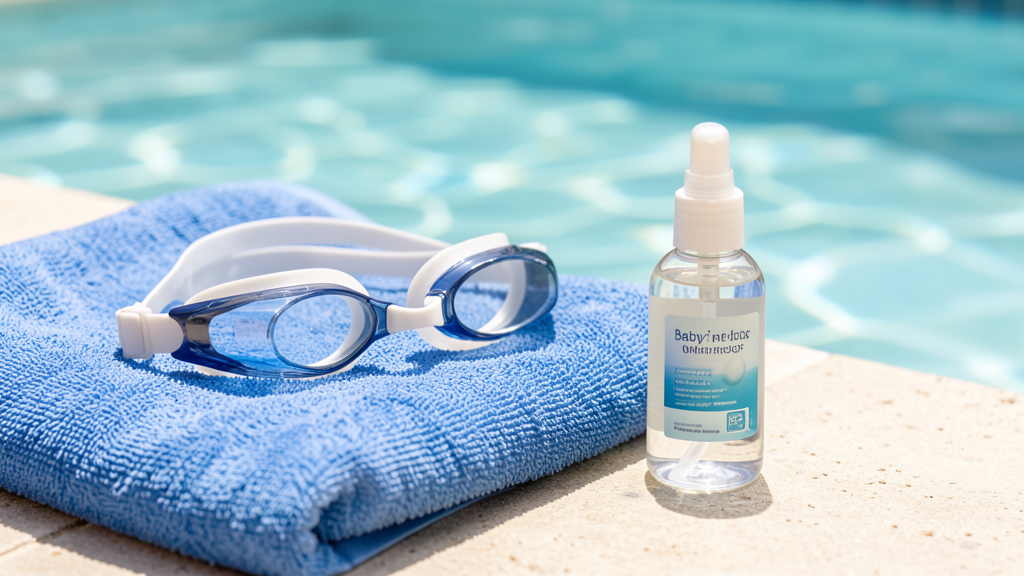
Basic anti-fog setup with goggles, baby shampoo, and a towel.
Fresh cool water
A clean goggle case or pouch
A soft towel for the straps and frame only (never the inside lens)
One of the following anti-fog treatments if the coating has worn off:
After every swim, rinse the goggles in fresh cool water. Hold them under the tap or slosh water through the lenses. Let water do the cleaning.
Do not wipe the inside of the lenses with your finger, a towel, or a microfiber cloth. Rubbing strips the hydrophilic coating. Even a gentle swipe can turn a coating that lasts months into one that lasts weeks. If something is stuck inside a lens, rinse it again. If it still will not move, the coating may already be damaged and you should switch to a surfactant method instead of scrubbing.
Step 2: Pre-wet before you put them on
Before the first lap, dip the goggles in the pool or splash water on the inside of the lenses. Pre-wetting does two things. A thin water film on the inside of the lens makes condensation spread into a clear sheet rather than beading into droplets, and it activates any remaining factory coating so it can spread moisture into a clear film.
This step is especially useful in cold water or when you step from a warm deck into a cooler pool. It will not last the whole session, but it buys you the first few minutes.
Step 3: Add a surfactant layer if the coating is gone
If your goggles fog no matter how well you rinse them, the factory coating has probably worn off. A surfactant breaks the surface tension so water spreads instead of beading. Pick the method that fits your budget, hygiene tolerance, and eyes.
Saliva
Spit or lick the inside of the lens, spread it into a thin layer with a clean fingertip, then give the goggles a brief rinse. Saliva is free and always available, and many swimmers find it surprisingly reliable. The trade-offs: it is short-lived, it can need reapplication mid-session, and it is not the most hygienic choice in a crowded lane.
Baby shampoo
Put a small drop of no-tears baby shampoo on each inside lens. Spread it gently with a clean fingertip and let it sit for 20 to 30 seconds. Then rinse lightly so a thin film remains. Many athletes dilute a few drops in a small spray bottle of water. With careful application, baby shampoo works well for many swimmers. It is also the gentlest option for sensitive eyes.
Commercial anti-fog spray, drops, or wipes
Sprays and drops work the same way as shampoo: they leave a thin hydrophilic film. Spray the inside of the lens, spread it, wait a few seconds, then rinse lightly before swimming. Wipes can work well on older goggles. They are the most expensive per use and can damage the remaining coating on newer goggles, so save wipes for goggles whose factory coating is already gone.
Step 4: Rinse lightly
Whether you use saliva, shampoo, or a commercial treatment, the goal is a thin residue, not a soapy puddle. Rinse the goggles briefly under cool water and shake off the excess. If you rinse too aggressively, you wash away the surfactant and the fog comes back.
Step 5: Put them on with a good seal
A loose goggle traps warm air and lets it churn against the lens. Press the frames gently against your eye sockets, then pull the strap into place so the seal stays even without being tight enough to leave deep marks. Once the goggles are seated, avoid lifting them onto your forehead. That turns the strap into a hot, sweaty bridge and pumps moisture back onto the lenses.
Step 6: Dry and store carefully
When the session is over, shake out the water and let the goggles air dry. Store them in a hard case or soft pouch, lens-side up, away from rough objects like kickboards or fins. Keep them out of direct hot sun. Heat accelerates coating breakdown and can warp softer gaskets over time.
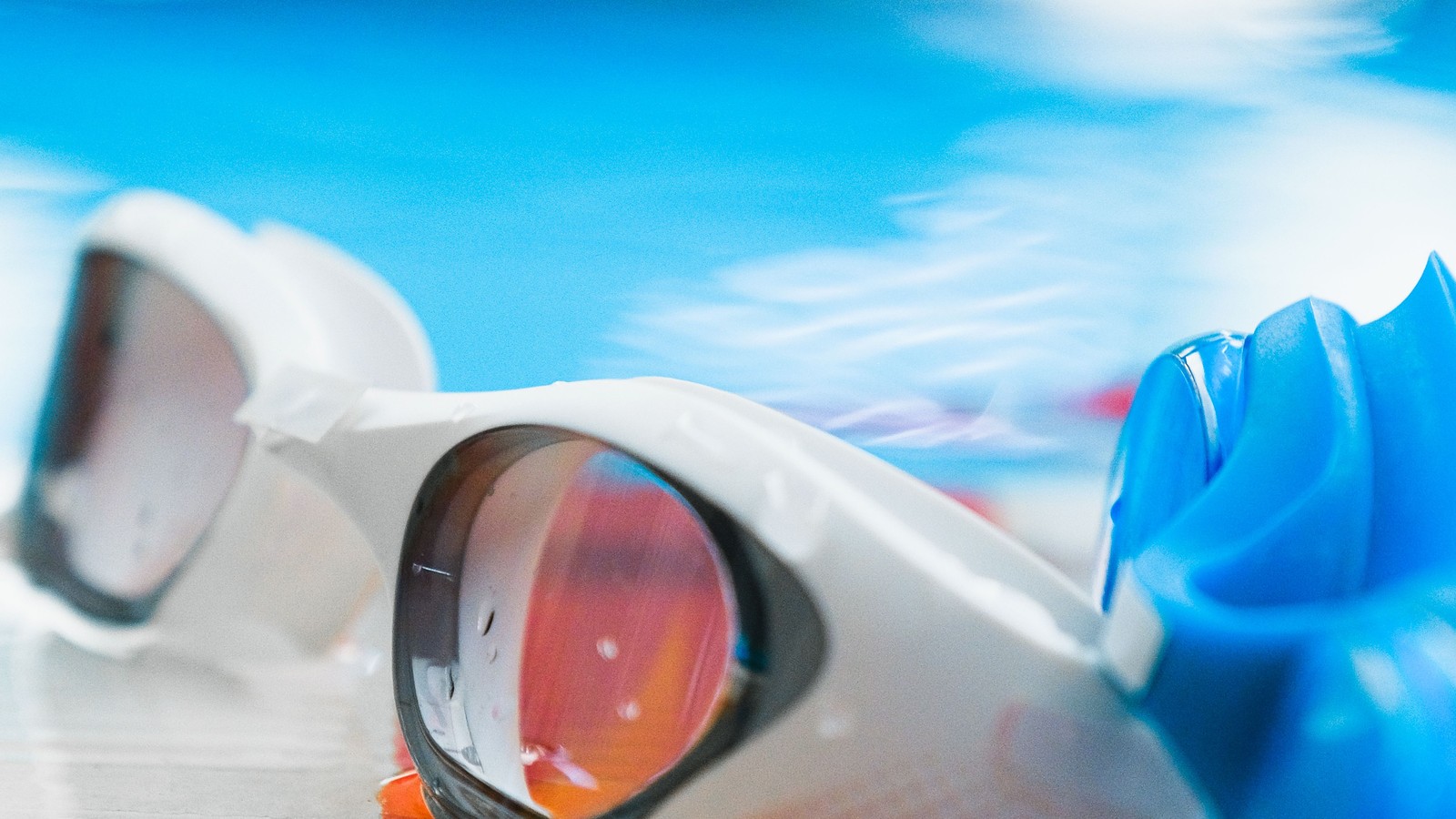
In-article detail image: goggles and cap on a wet poolside surface after a session.
What not to do
Do not wipe the inside lens. Fingers, towels, and cloths all strip the coating.
Skip toothpaste. It is abrasive and scratches polycarbonate lenses. The idea comes from scuba diving, where glass masks have no coating. It does not transfer to swim goggles.
Skip vinegar. The acid can damage plastic lenses.
Skip shaving cream. It can work in a pinch, but it is easy to leave a filmy residue that reduces clarity if you do not rinse thoroughly.
Do not use anti-fog wipes on brand-new goggles. They are effective on worn lenses, but they can strip a fresh factory coating.
Do not leave goggles loose in your bag or on the dashboard. Heat, pressure, and abrasion all shorten coating life.
Quick fixes by situation
Brand-new goggles fog right away: Pre-wet them or add saliva and wait a minute. Early fog is usually transient temperature shock, not a failed coating.
Coating still intact but fog creeping in: Rinse only, then pre-wet before the next set. Do not add sprays or wipes yet.
Chronic fog after a month of regular use: The coating is probably gone. Switch to baby shampoo or a commercial spray and reapply every one to three swims.
Race day, one application only: A single-use wipe can give max clarity for one session, but save it for older goggles.
Sensitive eyes: Baby shampoo is generally the gentlest. If you use a commercial product, rinse thoroughly and avoid ingredients that have irritated you before.
FAQ
Why do new goggles sometimes fog?
Even new lenses can fog when you first jump into cold water. The warm air inside the goggle hits the cold lens and condenses. Once the microclimate inside the goggle balances, the fog often clears on its own. Pre-wetting helps prevent that first burst.
How long does a factory anti-fog coating last?
With careful rinsing and storage, most factory coatings last a few weeks to a few months of regular use. Wiping the inside lens, using harsh cleaners, or leaving goggles in a hot car can cut that to a few weeks.
Is spit really effective?
Yes, many swimmers find it works as well as most commercial sprays and shampoos. The catch is that it does not last as long. It is a great backup in a pinch, not a long-term replacement for a good coating or treatment.
Can I restore a worn coating?
You cannot rebuild the factory coating at home. Once it is gone, the best option is to maintain a thin surfactant film with baby shampoo or a commercial anti-fog treatment. Treat the goggles every one to three swims depending on how hard the session is on the lens.
Why does cold water make fog worse?
Cold water cools the outside of the lens more than warm water does. That bigger temperature gap pulls more moisture out of the air inside the goggle, so droplets form faster.
Bottom line
Protect the factory coating first: rinse gently, do not rub, and store your goggles in a case. When the coating eventually wears out, switch to a thin surfactant film. Baby shampoo is cheap and gentle, and many swimmers find it works about as well as most sprays. Saliva works in a pinch. Wipes are strong for one-off sessions but expensive and harsh on newer lenses. Pick the method that matches your pool, your budget, and how often you swim, and fog becomes a problem you solve in ten seconds before you push off the wall.
Elite Swimmer HQ is reader-supported. As an Amazon Associate I earn from qualifying purchases. When you buy through links on our site, we may earn an affiliate commission at no extra cost to you.
Written by
Bella
Bella is the swimmer behind Elite Swimmer HQ. An Aussie who grew up obsessed with the pool and raced butterfly, she writes the guides, gear breakdowns and technique tips she wishes she had read sooner.
 Elite Swimmer HQ