 Elite Swimmer HQ
Technique

Backstroke: how to stop zig-zagging
Sighting, rotation and a straighter pull. The fixes that keep you in your lane and off the lane ropes.
By Bella
19 June 20262 min read
19 June 20262 min read
Sighting, rotation and a straighter pull. The fixes that keep you in your lane and off the lane ropes.
Backstroke has one unique problem: you cannot see where you are going. Wander across your lane, clip the rope, and your rhythm falls apart. Swimming straight on your back is a learnable skill, not luck. Here is how.
Pick a fixed point on the ceiling or a line of lights and track it as you swim. The backstroke flags tell you the wall is coming so you can count strokes to your turn without craning your neck.
Most zig-zagging comes from one arm pulling harder or wider than the other. Enter each hand at the same point above your shoulder, little finger first, and pull the same shape on both sides.
Good backstroke rolls from side to side along the spine. A stiff, flat back makes your arms throw you off line. Let your hips and shoulders rotate together while your head stays anchored.
Swim a few lengths with your eyes closed (in an empty lane) to feel which way you drift. Then correct the lazier arm.
Bella is the swimmer behind Elite Swimmer HQ. An Aussie who grew up obsessed with the pool and raced butterfly, she writes the guides, gear breakdowns and technique tips she wishes she had read sooner.
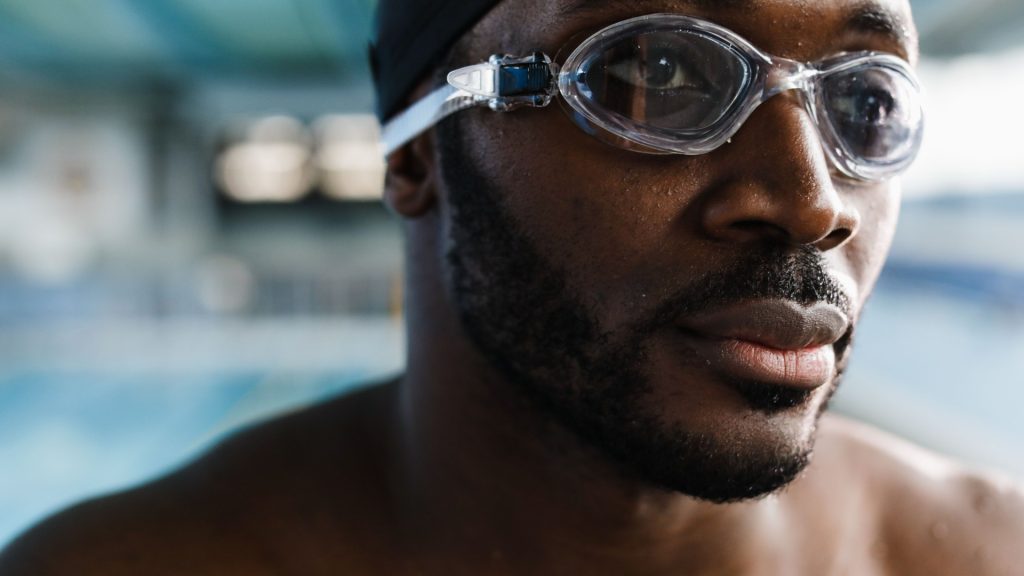
Stop swim goggles fogging with proven methods: protect the factory anti-fog coating, use saliva, baby shampoo, or commercial treatments, and store goggles…
A step-by-step path from a nervous somersault to a fast, confident wall. Start away from the wall and build up.
Nail the sequence that turns a stuttering breaststroke into a smooth, powerful one. It is all in the order.